
Safer Gambling
In conclusion, the evolution of casino regulations in the UK reflects the changing dynamics of society, technology, and the economy. Through diligent enforcement of regulations, the government aimed to safeguard the interests of both players and the broader community, setting a precedent for responsible gambling practices. Moreover, the enactment of measures to prevent crime and uphold the fairness of games contributed to enhancing the reputation and credibility of the UK gambling sector. This tension has led to ongoing debates and revisions in regulatory frameworks, with policies evolving to address issues such as problem gambling, money laundering, and underage access to gambling establishments. We publish registers of licensed businesses, individuals, regulatory actions and premises. If you or someone you know struggles with gambling addiction, we recommend you contact the free gambling helplines like those operated by organizations like
The Gambling Act 2005 paved the way for larger resort style casinos to be built, albeit in a controlled manner with one being built every few years until the Act is fully implemented. The Gaming Act 1968 (c. 65) liberalised the law, paving the way for more commercial casinos. James opened several casino-cum-cabaret and fine dining establishments in the 1960s, including the Charlie Chester Casino and Golden Horseshoe in London and the Kingsway and Grand Casino in Southport.

The introduction of CIAs may also further increase the cost to licensing authorities of discharging their statutory functions. In addition, we would like to encourage licensing authorities to make more use of their powers in relation to e.g. analysis and enforcement, which will result in increased costs. When Parliamentary time allows, we will also make some small changes to the 2005 Act to ensure that certain powers apply to authorities and/or licensing officers in Scotland as they do in England and Wales. The introduction of CIAs will require primary legislation and in advance of their introduction, we strongly encourage licensing authorities to make full use of their existing powers. We envisage that CIAs will be introduced using the same approach as applied in the Licensing Act 2003, for alcohol licensing. This should be more bespoke than a risk assessment and centre on particular details identified by the CIA.

Getting to Know the UK Gambling Commission
Data provided for a London casino over a four-week period in October 2019 showed a clear correlation between average dwell time and occupancy rates. Casino licences originate from two legislative regimes – the Gaming Act 1968 and the Gambling Act 2005. In order to ensure local authorities can continue to carry out their licensing and enforcement duties effectively, we are proposing to raise this cap by either 10%, 20% or 30%. We are also seeking views and evidence on what the impact would be if the 80/20 rule were to be removed completely.
For operators, the service could help resolve compliance questions more quickly, potentially reducing delays or misunderstandings when dealing with licensing rules. The initiative follows industry feedback from operators who said they wanted a more consistent way to resolve regulatory questions. For operators, the appointment signals continued regulatory pressure on illegal gambling and compliance failures. (2) A notice must be displayed in a prominent place in each part of the premises used for providing facilities for betting, setting out the terms on which persons are invited to bet on the premises.
Empowering local leaders to take decisions in their area is a priority for this government and we support them in the use of the broad powers which the planning and gambling regulation frameworks give them to set licence conditions and consider applications. This is subject to further work to assess the conditions and how to limit gambling harm, and subject to Parliamentary time to legislate. We support allowing specific proposals for new machine games to be tested within planned industry pilots under certain conditions, with the close involvement of the Gambling Commission. We recognise the internationally competitive market in which the small number of high-end casinos operate and the challenges the sector faces.


These rates are lower than the majority of other gambling products, although remain above the at-risk and problem gambling rates for ‘any gambling activity’. We would like to understand whether these types of protections are already available on these machines, or whether it would require investment in new machines or software. Therefore, this option would need to be accompanied by a requirement that Category B3 machines in these venues would have certain player safety controls, such as staff alerts where a player meets spend or time limits. For example, as previously highlighted, evidence provided by Bacta shows that the average stake placed on a Category B3 game is between £1.20 – £1.30, compared to 40p – 60p for a Category C machine.
While the risks vary by product and other factors, gambling participation is generally not in itself harmful and may even be positive. A YouGov survey commissioned by GambleAware estimated that 6% of the population are negatively affected by someone else’s gambling (for example through relationship strain or financial hardship) and that women are overrepresented in this category. However, a small proportion do suffer significant harm as a result of gambling, and the PHE evidence review included a detailed quantitative analysis on this issue. It is clear that gambling-related harms can ruin lives, wreck families, and damage communities, with issues including mental health and relationship problems, debts that cannot be repaid, crime, or even suicide in extreme cases. However, Public Health England (PHE) compiled, assessed and reviewed evidence on gambling participation and harm as part of the Gambling-related harms evidence review which was initially published in September 2021, then revised in January 2023 by the Office for Health Improvement and Disparities.
The Commission’s continued close monitoring of licensees who enter into white label partnerships is unlikely to have new impacts on the sector, but will help ensure that the existing rules are followed and consumers are not put at risk. Gambling Commission enforcement against a major white label provider provides a wide-ranging example of the types of compliance risks which can emerge when licensees fail to maintain sufficient oversight and control of their white label partners. Social responsibility provision 1.1.2 (responsibility for third parties – all licences) makes clear that licensees are responsible for overseeing all third parties they contract with and ensuring they fully comply with the Licence Conditions and Codes of Practice.
Given the small number of responses, we assume that the favoured option amongst licensing authorities remains Option 2. Under Option 2(a), the Bingo Association has advised that 2 substantial multi-site bingo club operators and several single site operators would be disadvantaged by comparison to the current regime. Option 2(a) had more varied views across bingo operators.
- We will review the Commission’s licence fees to ensure it has the resources to continue its transformation and deliver on the commitments across this white paper.
- These respondents would prefer to see table games as the most common activity under a casino licence, highlighting that table games are more likely to lead to breaks in play.
- As the Gambling Commission’s funding increases, and in turn its capacity to require provision of and analyse data from operators, it will consider how this data could be made available in anonymised form for use by researchers.
We will look further at the legislative options and conditions under which licensed bingo premises might be permitted to offer side-bets in a more flexible or expanded form within a defined set of parameters with rules to reduce the risk of harm. We propose to adjust the 80/20 ratio which governs the balance of Category B and C/D machines in bingo and arcade venues to 50/50, to ensure that businesses can offer customer choice and flexibility while maintaining a balanced offer of gambling products. With banks withdrawing facilities for processing foreign cheques, we will make a limited change to the Gambling Act which will permit casinos to offer credit to non-UK residents, subject to thorough financial risk and anti-money laundering checks. We will consult further on the details of how casinos will be able to opt to choose this allowance and ratio over their current entitlement, with fees and mandatory licence conditions in line with 2005 Act casinos. This chapter sets out a number of areas where we propose to reset regulation for land-based gambling, while maintaining or strengthening safeguards that are needed to protect vulnerable groups and communities from gambling harm.
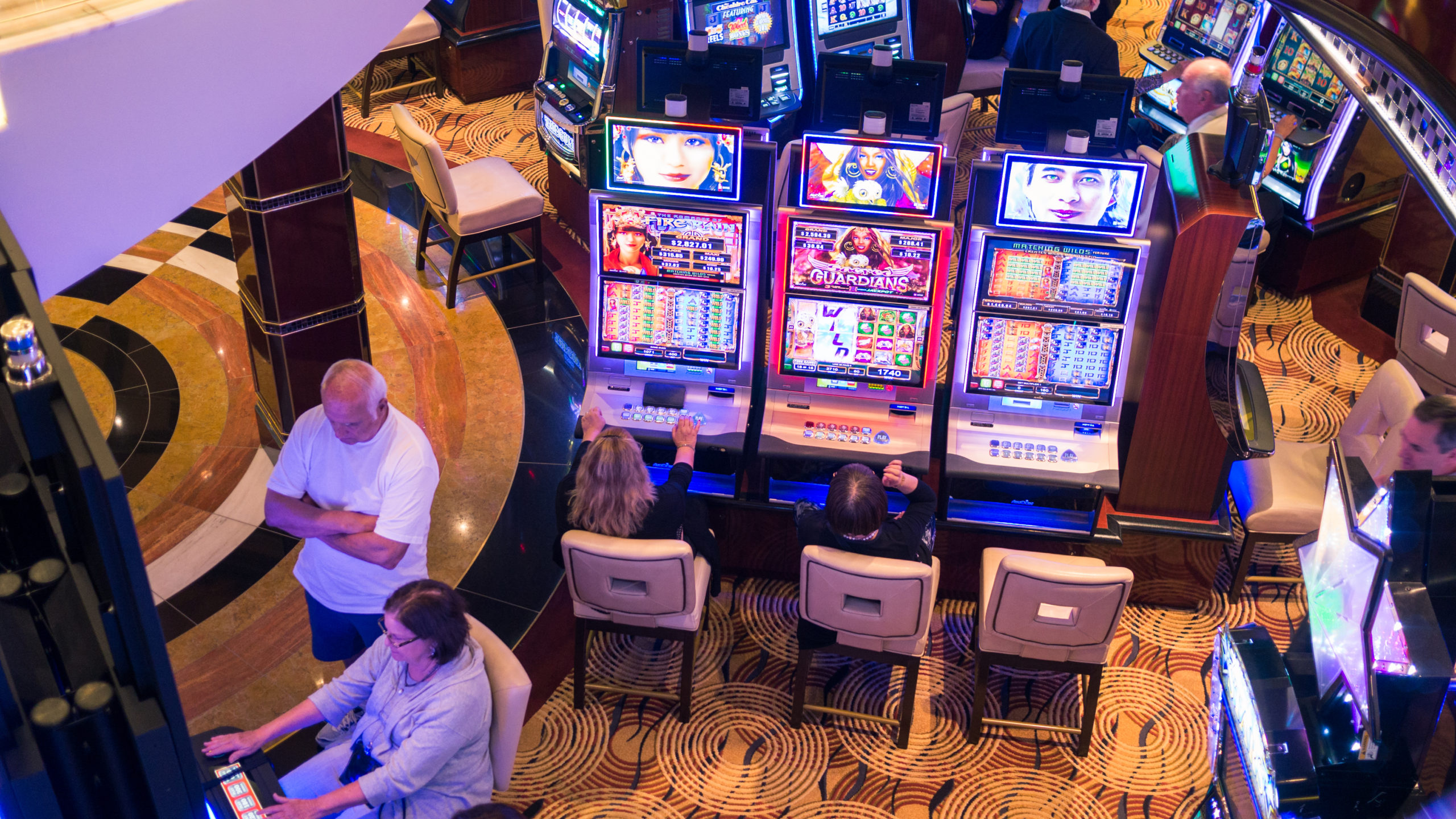
Having considered the evidence overall, we do not think there is any justification for adjusting the thresholds. Some of these submissions pointed to the results of the age-verification test purchasing on machine games pubs in England and Wales, which was undertaken jointly by the Gambling Commission and Local Authorities, and found an 84% failure rate in 2019, and an 88% failure rate in pubs in England in 2018. We would expect industry to strictly adhere to this ratio and will set out detailed requirements in further consultation. We are mindful of the Gambling Commission and local authorities’ view that the 80/20 rule is difficult to police where some sites not on gamstop operators intentionally subvert the rules, for instance through offering game content on a very small device which may not be easily accessible to consumers.

All operators must also adhere to our Licence Conditions and Codes of Practice (LCCP). Our guidance summarises the legal background and legislation which operators must follow to be compliant. The NRA sets out the key money laundering and terrorist financing risks for the UK. HM Treasury and the Home Office have published the national risk assessment (NRA) of money laundering and terrorist financing 2020 (opens in new tab).
In addition to the licence conditions and legislation governing how facilities to gamble are offered, all gambling advertising must comply with the UK Advertising Codes which are set by the Committees of Advertising Practice and enforced by the Advertising Standards Authority (ASA). The change created a ‘point of consumption’ regulatory regime, meaning that any gambling company transacting with British consumers has to have a licence from the Gambling Commission and comply with the licence conditions. Further detail on our initial estimates of the likely or possible impacts of the package, including on sectors related to gambling such as horse racing, is at Annex A.
Genting International Casino is one of the largest casinos in the UK and certainly the largest in Birmingham. Yes — all licensed UK casinos offer games that use Random Number Generators (RNGs) to ensure fair and random outcomes. All player funds are held in separate accounts, ensuring they are always protected and available for withdrawal.Are online casino games fair? UKGC-licensed casinos protect your money and personal details using strong encryption and trusted payment methods.
Making changes to your licence
Advertisers must instead promote responsible gambling and clearly state that all gambling involves risk. They apply to both direct advertising by gambling operators and affiliate marketing. The gambling and betting advertising rules are designed to ensure that ads are socially responsible. The ASA was established in 1962 by the advertising industry to adjudicate complaints based on the newly published British Code of Advertising Practice (the CAP Code). However, the Gambling (Licensing and Advertising) Act 2014 brought changes to the licensing regime for operators. Until 2014, when amendments to the Gambling Act were made, operators licensed in certain countries could advertise their services and provide gambling facilities in the UK without an additional license from the UKGC.
Some operators will benefit from both. This option balances our 2 key priorities, the first being to support arcade and bingo premises through increased commercial flexibility within the context of many businesses operating at a loss post-COVID-19. While not as liberalising as Option 3, responses from some operators indicated that increases in Category B cabinets would not be vastly different to projections provided for Option 3.
Those who lead on these fronts will be best placed to grow sustainably — and defend their licence — in a sector under increasing scrutiny. Operators should keep a clear audit trail of all actions taken — as the ability to evidence compliance is just as important as achieving it. This elevates frontline teams into a key role within the broader safer gambling ecosystem, further emphasising the importance of accountability. The Gambling Journal covers the global iGaming industry through daily news, sharp analysis, and editorially independent company profiles.
However, some betting shop operators were aligned with the non-industry responses and believed that the session time and net position should be displayed at all times. We propose that Category D machines are not required to display safer gambling messaging beyond the current requirements placed on these machines. The government proposes that the existing safer gambling messaging is used on machines that accept cashless payments. Some industry responses also argued that members of staff in casinos already monitor players and interact where appropriate.
Industry submissions put forward a range of proposals for changes to the rules that could allow the sector to develop and thus support the Review’s objective of ensuring the regulatory landscape for land-based gambling reflected changes since 2005. The Act embedded a principle that gambling should generally take place in gambling-specific premises as opposed to places where it would be incidental to the establishment’s primary purpose, such as cafes or taxi offices. The fees must be set on a cost recovery basis to cover the cost of administration and enforcement (e.g. inspections), and are therefore essential to ensure that licensing authorities can properly regulate gambling in their areas. Scottish Ministers also have the power to set application and annual fees for premises licences, which differ from the fees set out for England and Wales, set out in the Gambling (Premises Licence Fees) (Scotland) Regulations 2007.
Online casinos, for example, must prevent underage gambling, display the return-to-player (RTP) percentages for all games, and promote fair and responsible gambling. This includes poker, roulette, blackjack, and other casino games, as well as online slot games.” In addition, all online casinos must use software from suppliers that hold a license from the Gambling Commission. Now, all firms that wish to advertise and provide gambling services to customers based in the UK must obtain a license from the UK. All other machines, namely Categories A, B, and C (including Category B3A lottery-style machines), are restricted to those aged 18 and over. Online casino operators are required to carry out age and identity verification procedures (updated in 2019) for all newly registered customers. It also regulates the remote gambling sector, which includes online bookmakers, bingo sites, and casino websites.
Some lotteries including large society lotteries and licensing authority lotteries are licensed by the Gambling Commission, while small society lotteries must register with a licensing authority. Some respondents pointed to the relatively high test purchasing scores for licensed gambling premises compared to those for the sale of other age-restricted products. There was limited evidence to suggest these measures would materially improve on the current rules, which allow operators to verify age and identity via background checks that are effective in the vast majority of cases and are minimally disruptive to the customer. Bacta argued that further restrictions on children’s access to Category D machines was unnecessary, drawing attention to its voluntarily imposed 18+ age limit for playing Category D cash payout slot machines and measures in its charter that limit access and appeal to children. Evidence came from a wide range of respondents including industry, charities, researchers, campaign groups, Parliamentarians and local authorities. One of the few longitudinal studies of gambling behaviours in the UK found that patterns of problem/moderate risk gambling can often be established by 20 years of age.
Should separate table gaming areas of 12.5% or more only be allowed to count towards the total table gaming area for 1968 Act casinos under the new regime? Which approach do you think should be taken in relation to the maximum gambling area for 1968 Act casinos? Should the minimum table gaming area for Small 2005 Act casinos be reduced to 250sqm?
We will not accept licensees simply stating that GDPR means that they are unable to comply with an aspect of gambling regulation, or otherwise take certain steps to protect the public interest. Thorough consideration of transparency requirements will also assist data subjects, and assist data controllers to demonstrate compliance with obligations relating to accountability. We do not anticipate that the need for such measures will cause a significant barrier to complying with gambling regulation.
Officials say two unlicensed premises in Doncaster were targeted a multi-agency operation. The bookmakers says it had ‘no choice’ after rises in gambling tax, national insurance and wages. A big test may come later this year, with indications that there may be a ban on gambling companies sponsoring the shirts of football and darts players. The Commission has already cracked down on one of the bookmakers’ cash cows, the fixed-odds betting terminal. The British public spent £2.2bn on online slot games in 2019, according to the Gambling Commission, and some estimates say the UK now accounts for 15% of these types of games. A Gambling Commission review from June 2025 found that satisfaction scores climbed 6 per cent among users who got richer risk alerts and detailed gameplay reports.